For the last twenty years, the marketing playbook for Physical Therapy clinics has been relatively static: Master Google Ads, dabble in Facebook, and optimize your way to a click.
But that era is coming to an end.
With the recent announcement of ChatGPT ads, we are witnessing a paradigm shift. This isn’t just another channel to dump budget into; it is the dawn of Conversational Advertising. For practice owners facing rising ad costs and diminishing returns on traditional platforms, this represents an unprecedented opportunity to lead the pack.
What is Changing?
On January 16, 2026, OpenAI announced the testing of ads within ChatGPT. Unlike the intrusive banners of the past, these ads appear at the end of chats and match the context of the user’s inquiry.
Imagine a potential patient asks, “What are the best non-surgical treatments for a torn meniscus?” Instead of a list of blue links, they receive a synthesized answer, followed by a contextually relevant suggestion for your clinic.
OpenAI has built this platform on tenets of privacy and relevance. For medical professionals, this is crucial: OpenAI has stated that user data will not be sold, and ads will not influence organic answers. This aligns perfectly with the trust required in healthcare marketing.
From Keywords to Conversations
Traditionally, digital marketing was about Search Engine Optimization (SEO)—ranking for specific keywords.
The new era relies on two new concepts:
AEO (Answer Engine Optimization): Providing the most accurate, direct response to a patient’s question.
GEO (Generative Entity Optimization): Creating trusted sources that AI systems can rely on to build their answers.
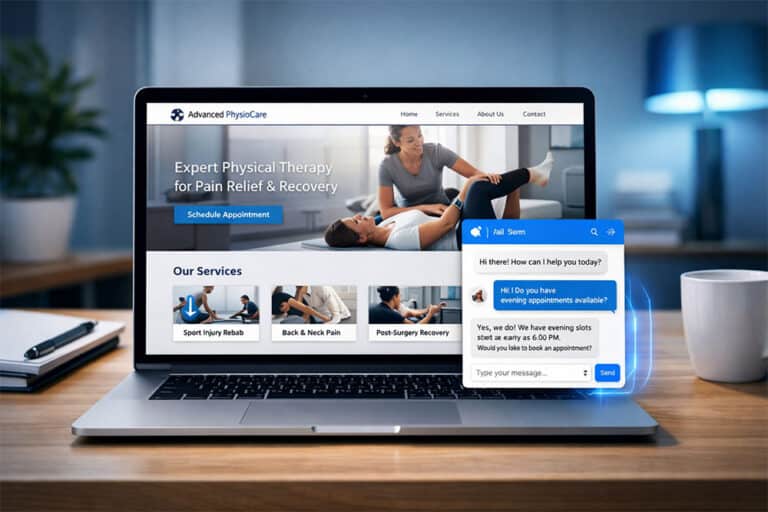
Conversational Commerce means advertising is no longer “interruptive.” It becomes part of the dialogue. The goal isn’t to drag a user to a landing page immediately; it is to assist them in their decision-making process right inside the chat.
The Playbook: Preparing Your Practice for the AI Era
Small private practices have a distinct advantage here. While large hospital systems move slowly, you can adapt to these principles immediately. Here is your 4-step roadmap:
- Establish True Authority
Before you spend a dime on AI ads, you need quality content. ChatGPT prioritizes high-quality, authoritative sources. To win in this space, your site needs in-depth guides, case studies, and original insights on specific conditions. You must establish your clinic as the “entity” the AI trusts to answer medical questions. - Prepare for Dialogue, Not Slogans
Traditional ad copy is slogan-based (“Get Pain Free Today!”). Conversational ads are dialogue-based. Start mapping out the actual questions your patients ask in the exam room. What are their objections? What are their comparison points? Your content should answer these questions as a guide, not a salesperson. - Rethink the Patient Journey
The standard funnel (Ad -> Landing Page -> Form Fill) is collapsing. In a ChatGPT experience, discovery, evaluation, and decision-making can happen in a single interaction. Eventually, patients may be able to schedule an appointment or view your availability without ever leaving the chat window. The practice that reduces friction the most wins. - Measure Influence, Not Just Clicks
In a conversational landscape, “last-click attribution” (giving credit to the very last thing a user clicked) becomes less relevant. You need to measure how often your brand is mentioned in conversations and the quality of the leads coming through. A successful AI strategy focuses on efficiency and the reduction of patient friction.
The Future is Conversational
The transition has started. ChatGPT ads are not just a trend; they are the future of how patients will find care.
At Direct Response PT, we are already helping clinics pivot from traditional SEO to Generative Entity Optimization. If you want to ensure your practice is the one the AI recommends, or if you are just curious about how this affects your current marketing strategy, click the link below to get early access updates on AI ads:
Keep Me Ahead of This Shift >>

Shayne Nowikow
Latest posts by Shayne Nowikow (see all)
- Why ChatGPT Ads Are the Next Big Shift for Medical Marketing - 2nd March 2026
- GEO and The New Frontier of Search in the Age of AI - 28th November 2025
- Have you heard of Edge SEO? - 1st November 2024